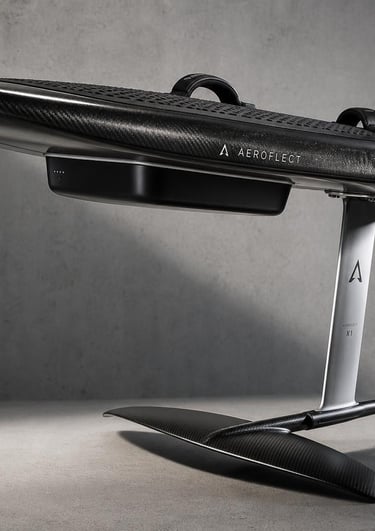
The Best eFoil for Beginners
The right first board does not flatter the rider — it forgives them. Our editors test for stability, predictability, and the slow rise that makes flight feel inevitable rather than earned.
The right first board does not flatter the rider — it forgives them. Our testing focuses on stability, predictability, and the slow, controlled rise that makes flight feel inevitable rather than forced.
A beginner’s eFoil is a fundamentally different machine from a performance board, even when the catalogue suggests otherwise. What matters in the first sessions is not speed or agility, but patience: a board that absorbs mistakes, rises gradually, and allows the rider to build confidence without punishment. The goal is simple — reach controlled flight as quickly and safely as possible.
In 2026, three boards stand out for doing exactly that.
1 · Fliteboard Series 3 (Cruiser configuration)
We rank the Series 3 first not because it is the most affordable option, but because the Cruiser wing setup is the most forgiving beginner package currently available.
The takeoff is progressive rather than abrupt. Pitch sensitivity is deliberately softened. The controller’s low-power assist mode helps prevent the overcorrection that often destabilises first-time riders. In our testing, most beginners achieve stable, repeatable foiling by their third session.
In its favour
Cruiser wing offers the gentlest takeoff in the segment
Controller has an excellent low-power assist mode
Mobile app provides immediate feedback on technique
Resale value protects the investment if the rider progresses fast
Worth noting
Premium pricing — not the cheapest way to learn
Carbon deck demands careful handling on dock and in transport
2 · Waydoo Flyer ONE Plus (Stability wing)
For families, first-time buyers, or riders testing the sport before committing to a premium investment, the Flyer ONE Plus remains the most rational entry point.
The Stability wing is wider and more forgiving than standard configurations, prioritising control over speed. The result is a board that feels intentionally calm during takeoff and early flight phases.
Importantly, the lower price point changes the learning psychology: early falls and mistakes carry no financial stress, which makes progression more natural.
In its favour
Approachable price point for first-time buyers
Stability wing is exceptionally forgiving
Robust construction tolerates the inevitable bumps of learning
Spare parts are widely available
Worth noting
Less refined feel than premium alternatives
Battery life adequate but not class-leading
3 · Lift Foils LIFT4 (Cruise wing)
We hesitate slightly to recommend the LIFT4 as a first board due to its price point, but in the Cruise wing configuration it delivers one of the most confidence-inspiring learning experiences available.
The ride is stable, quiet, and exceptionally well-balanced. For riders who already know they will remain in the sport long-term, starting on the LIFT4 can make sense — it removes the need to upgrade later.
The four sessions a beginner needs
Regardless of which board you choose, the path to flight is consistent. Below is the structure we use with first-time riders.
Session one — water sense
Lying flat on the board. Throttle on, throttle off. Learn the controller, learn the cut-off, learn how the board behaves with the foil submerged but not engaged. Most riders never stand in this session. That is correct.
Session two — kneeling and the first lift
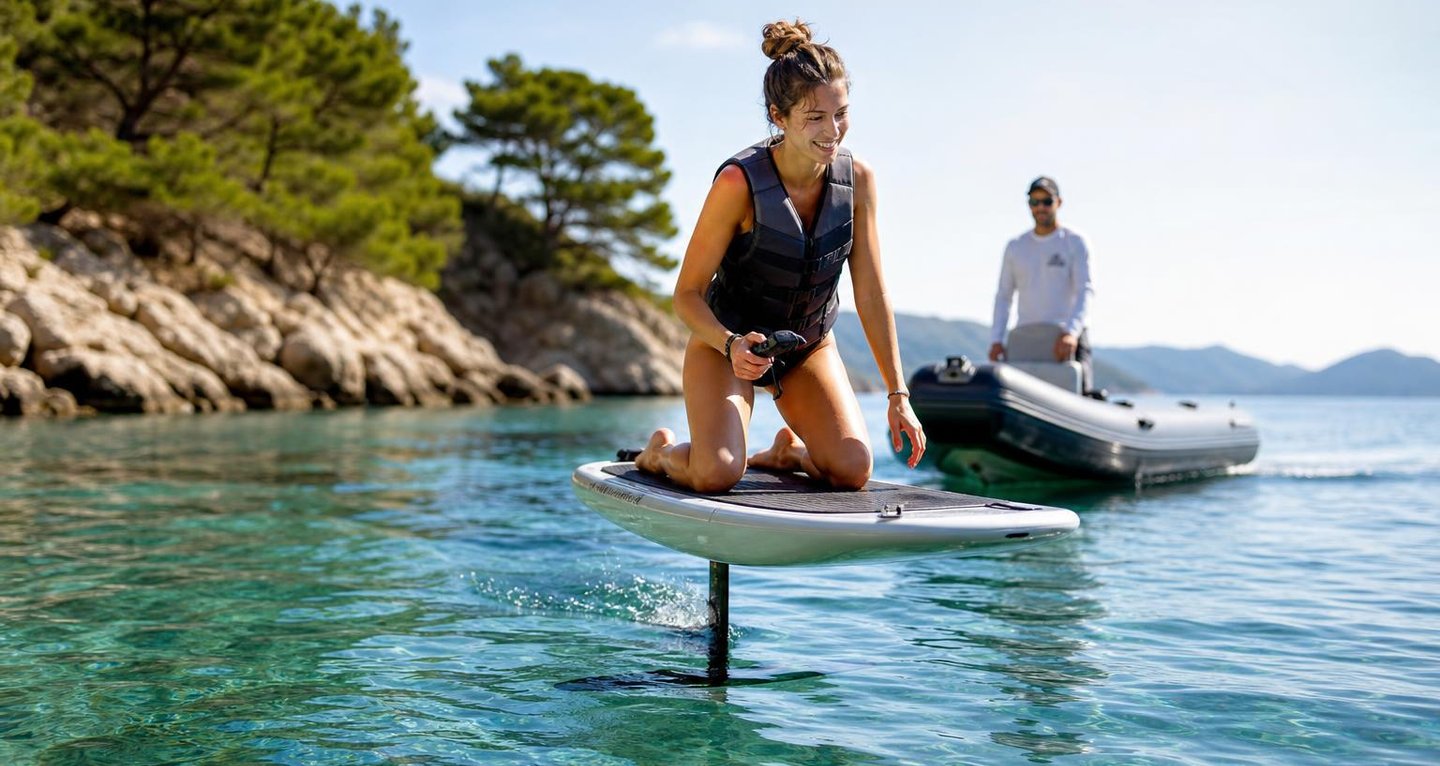
On the knees, with hands on the board. Apply gentle throttle. The board will rise — only a few centimetres at first — and settle. The sensation is unmistakable once it happens.
Session three — standing
Most riders will stand and balance for a few seconds in this session, then fall. Then again, and again. By the end of the session, brief flights of three to five seconds are normal.
Session four — flight
Sustained flight, controlled turns, growing confidence. From here, the sport opens up.
Do I need to know how to surf?
No. The motor does the work that a wave would do for a surfer. What helps is general balance — yoga, snowboarding, or skating all transfer well.
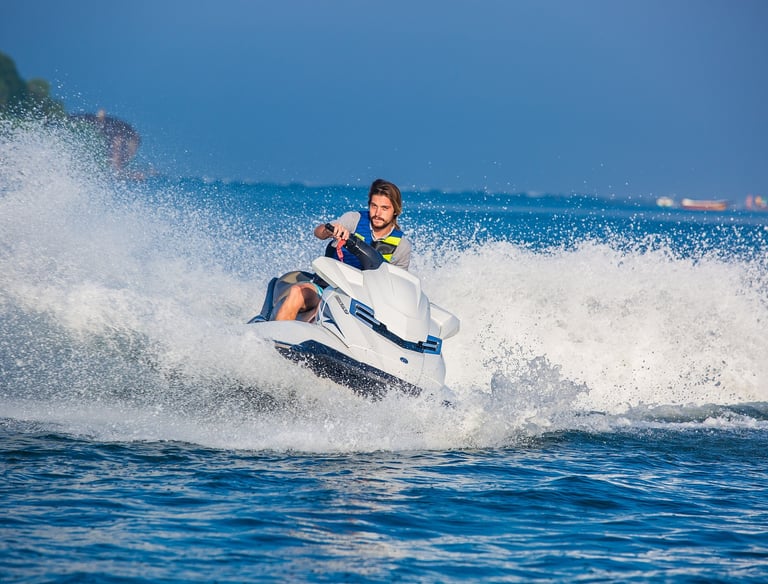


Is it safer than a jet ski?
In our testing, yes. The throttle cuts the moment the rider releases it. There is no propeller exposed to the rider. The fall is into water, not into a hard hull.
Two hours of instruction will save you a season of bad habits. We strongly recommend it, regardless of board choice.
Should I take a lesson?
FAQs
Is efoiling hard?
Efoiling has a gentle learning curve with the right board.
How long to learn?
Most beginners get comfortable within a few hours on calm water.
Is efoiling safe?
With proper gear and cautious riding, efoiling is a safe and enjoyable sport.
What affects stability?
Board size and foil design play key roles in stability.
How long is battery life?
Beginner efoils typically offer 60 to 90 minutes per charge.