Why eFoils Cost What They Cost
A frank breakdown of the materials, batteries, and small-batch craftsmanship that put serious electric hydrofoils on the wrong side of €10,000 — and why that price is unlikely to fall meaningfully soon.
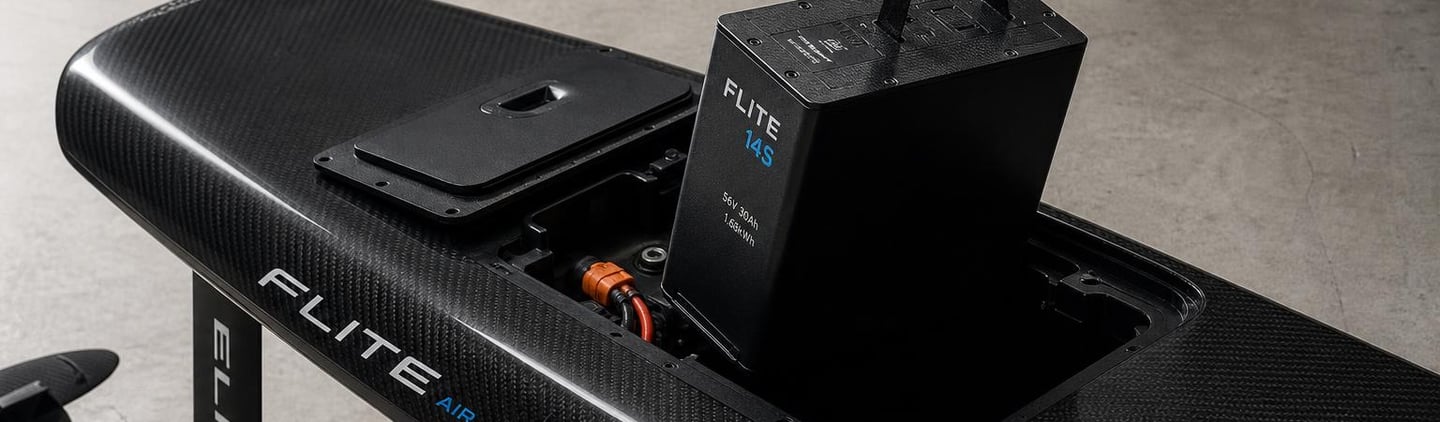
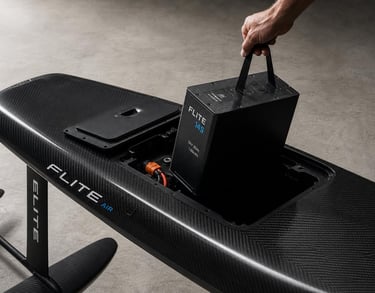
The first question every newcomer asks is the right one: why does this thing cost as much as a small car? The answer is not greed, and it is not branding. It is genuine cost, distributed across genuinely expensive components, manufactured at genuinely small volumes.
The battery
The battery is the single most expensive component — typically €2,500-€4,000 wholesale. Lithium cells of marine grade with the safety certification required for a sealed underwater enclosure are not the same cells that power a laptop. They are properly engineered objects with proper costs.
The motor and electronics
A water-cooled brushless motor capable of 6-8 kilowatts in a hostile saltwater environment costs around €1,200-€1,800. The control electronics — wireless throttle, motor controller, battery management — add another €600-€900.
The board
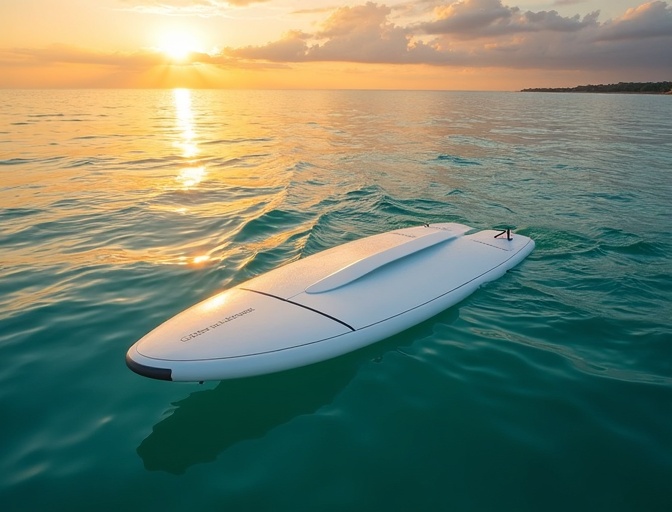
A carbon-fibre eFoil hull, hand-laid over a structural foam core, costs roughly €1,800-€2,400 in materials and labour. Compared with a mass-produced surfboard, this is twenty times the cost. The difference is the carbon, the marine-grade hardware, and the labour.
A precision-machined, hand-finished carbon hydrofoil is €1,000-€1,500 in materials and labour. The wing alone takes about eight hours to produce.
The foil
Assembly, testing, distribution
Add €1,200-€2,000 for assembly labour, wet-testing, packaging, distribution, dealer margin, and warranty reserve. The numbers add up, transparently, to a board that has to retail in the four-figure-low-five-figure range to support the business.