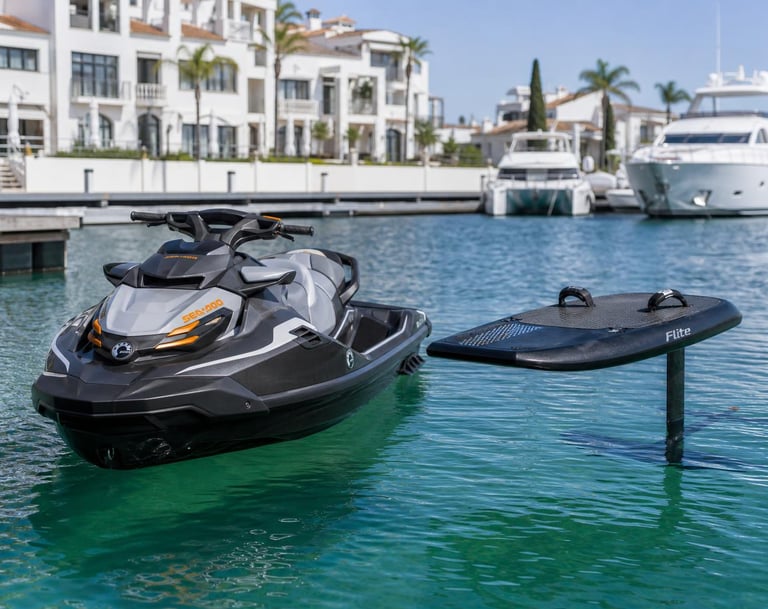
eFoil vs Wingfoil
Two cousins of the foiling family, with very different relationships to the wind. Choosing between them depends less on preference than on geography.
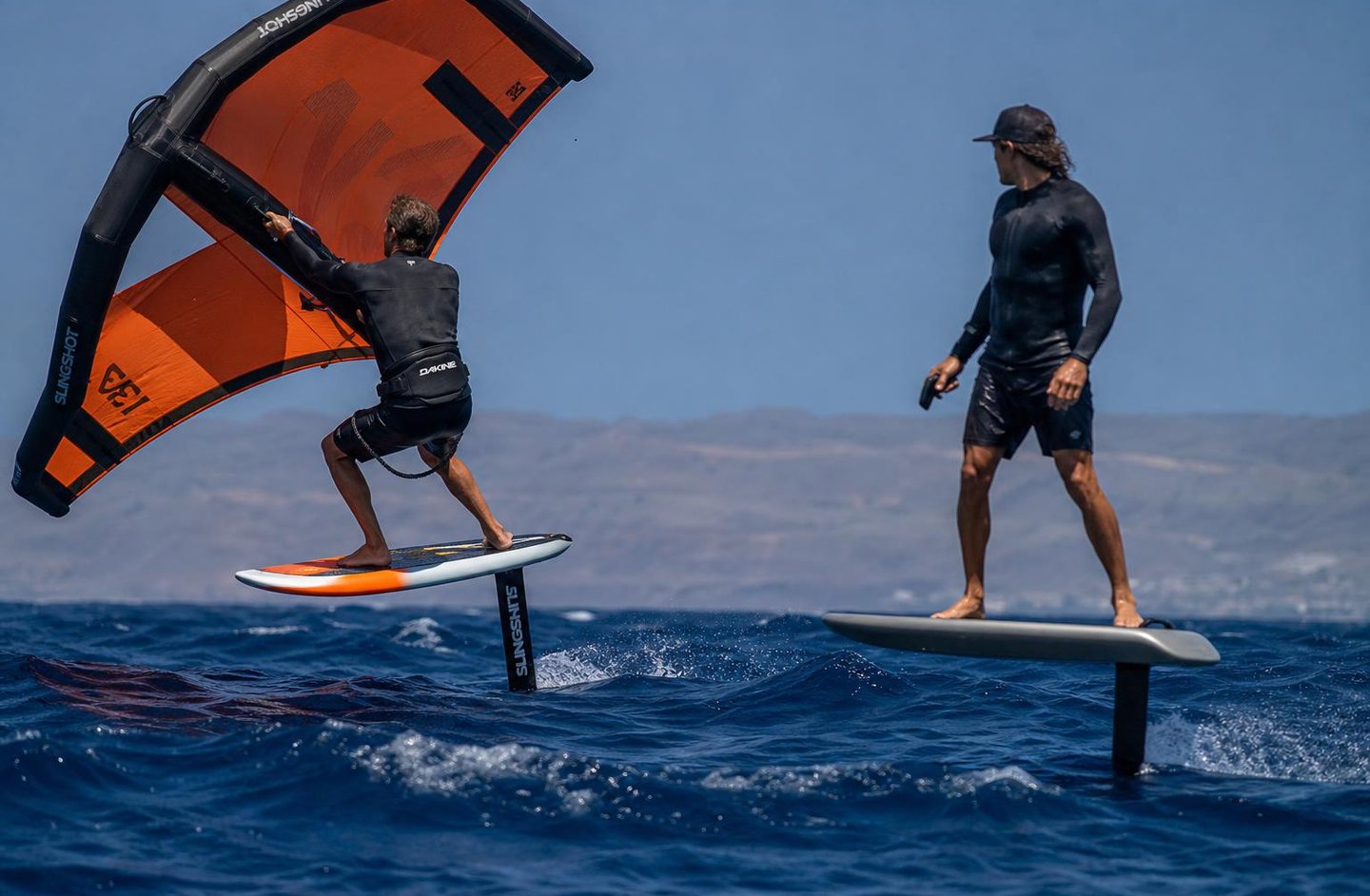
Wingfoil and eFoil emerged at roughly the same moment, and they are often discussed as alternatives. They are not, really. They share a wing geometry under the water but almost nothing else above it. One is powered by wind and a handheld sail; the other by a battery and a thumb-throttle. The choice between them is, in practice, a choice about the kind of relationship you want with the weather.


Skill investment
Wingfoiling demands a serious skill investment — typically twenty to forty hours before genuine competence. An eFoil is rideable in three to four sessions. The wingfoil's payoff is that mastery is essentially endless. The eFoil's is that you can hand it to a guest after dinner.
Storage and transport
A wingfoil packs into a single carbon-fibre wing bag and is genuinely travel-friendly. An eFoil — battery, board, foil — is heavier, bulkier, and a non-trivial proposition to fly with.
Wind dependency
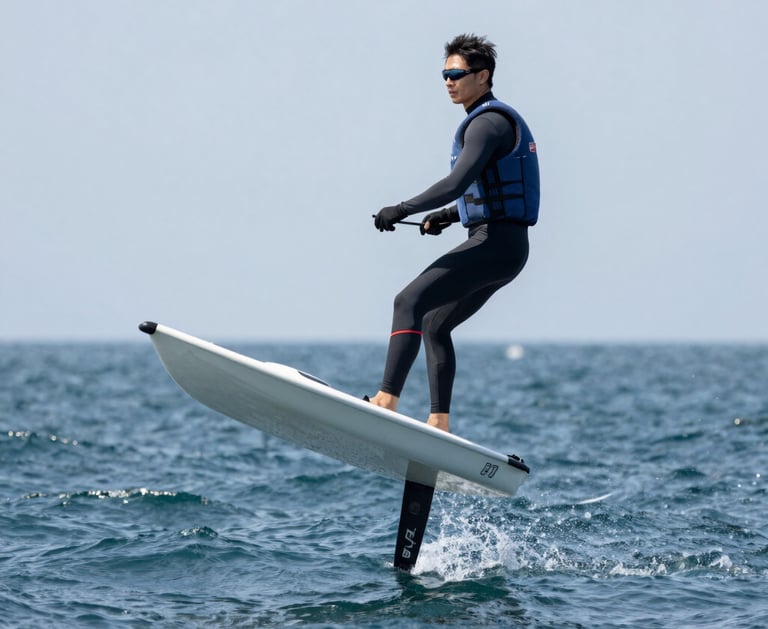
A wingfoil needs at least 12 knots of steady wind to fly — and ideally 15 to 20. An eFoil flies in any condition that allows the rider to stand: glassy lakes, rolling Mediterranean swell, light onshore breeze. If you live somewhere reliably windy (Tarifa, Maui, the Aegean), wingfoiling rewards the patient rider richly. If you live somewhere fickle, an eFoil is the only board that will see consistent use.
Cost
A complete wingfoil setup runs €3,500-€5,000. An eFoil starts at €10,500. Wingfoiling is the cheaper sport by every measure.
The verdict
Both, ideally. They complement each other beautifully — wingfoiling on the windy days, eFoiling on the calm ones. If forced to choose just one, choose by your local wind statistics: under 15 average knots, eFoil; over 18, wingfoil.