Is an eFoil Hard to Learn?
Less than the internet suggests, more than the brochures suggest. By the fourth session, almost everyone is flying. Here is what those four sessions actually look like.
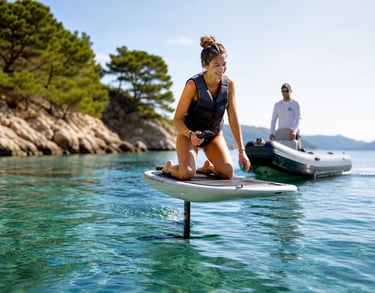
The eFoil has a reputation for being difficult to learn that is partly deserved and largely outdated. The reputation comes from the first generation of boards — twitchy, poorly-tuned, sold without instruction. The current generation is a different proposition. Most reasonably coordinated adults, given two hours of proper instruction, are flying by the end of session three.


Session two — kneeling and the first lift
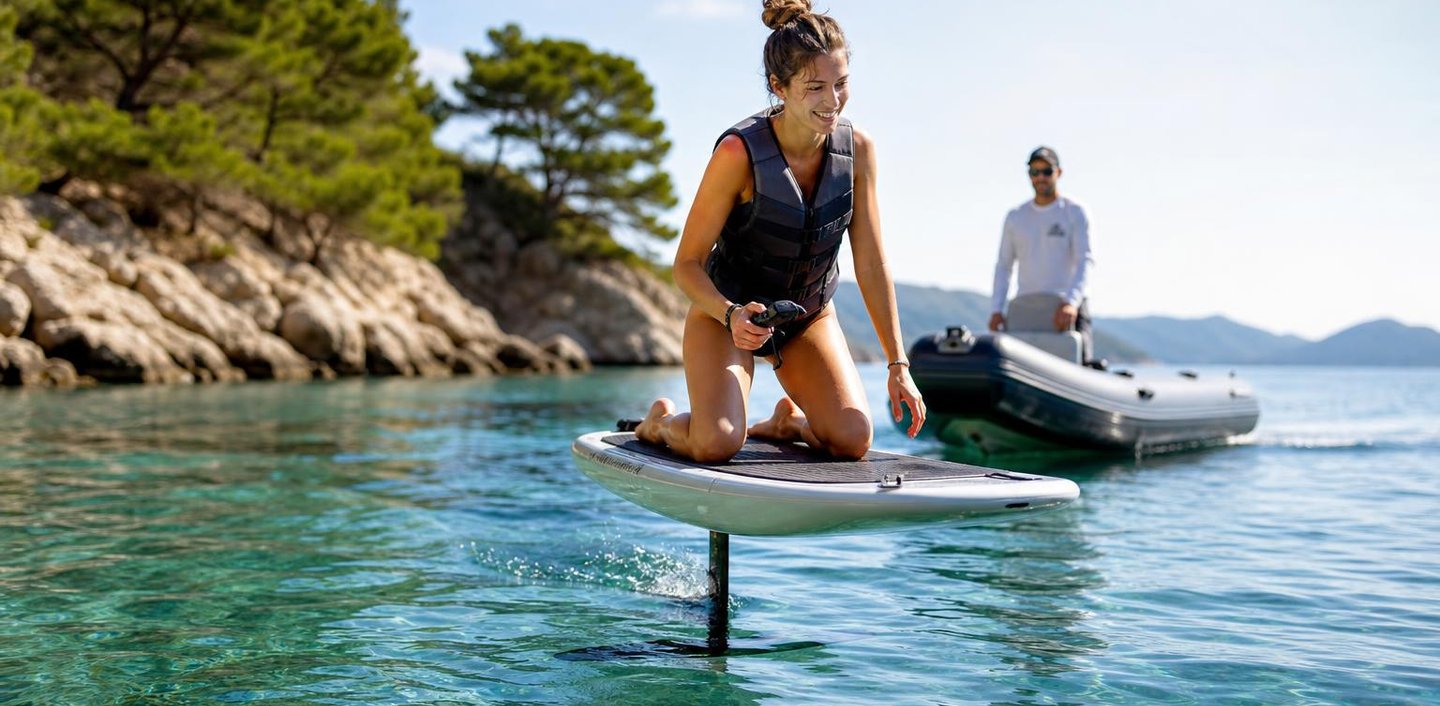
Up onto the knees, hands on the board, gentle throttle. The board will rise gradually — first a few centimetres, then maybe ten, then back down. The sensation of the foil engaging is unmistakable. By the end of this session, most riders have experienced the lift twice or three times.
Session three — standing
The crucial session. From a stable kneeling pose, slow rise to a standing crouch. Keep weight forward. Apply throttle gently. The board may fly for two seconds, then fall. Then four seconds, then fall. Then ten. By session three's end, sustained flights are normal.
Session one — water sense
Lying flat on the board, in calm water, with the foil set to its lowest position. Practise the throttle, the kill switch, and the cut-off leash. You will not stand. You will not fly. You will learn how the board behaves when the motor is on and when it is off. This session is about removing fear of the throttle.
Session four — flight, properly
Standing upright, foiling for a minute or more, beginning to turn. The sport reveals itself.
Frequently asked
What if I can't surf?
Most learners cannot. Surfing is unrelated. What helps more is general balance — yoga, snowboarding, skating.
Is it dangerous?
Less so than a jet ski, by every meaningful metric. The throttle cuts on release. The fall is into water.
Can children learn?
Yes — typically from age 12 with a light board configuration and supervision.